Wednesday, July 3, 2013
The transforming nature of mentoring
After college like many athletes I stopped working out with the consistency I did during my basketball playing years. Eating too much, working a desk job and neglecting my body became the norm. I managed to put on 100 pounds and got up to 310 pounds at one point last year.
As many of you know I mentor at risk inner city youth. One of my young men is grossly overweight and participates in limited physical activity. He is only 11 years old and wears a 50S jacket. I wanted to share with him the importance of working out and staying in shape but who was I to speak into his life dealing with my own lack of discipline and activity?
God began to convict me as I worked on my annual plan for growth and development. The plan focuses on 4 different phases, one of them being the physical body. As I looked through my goals from the previous year I realized how lethargic I had become in setting goals that were not very challenging.
When I thought about my mentee and my own lack of discipline toward remaining physically healthy I started developing a deep motivation to challenge myself in this area. It started so simple, skipping those cinnamon crunch bagels every morning from Panera, eating smaller portions and drinking water instead of soda.
Before long I developed a passion to walk and start jogging again. I was losing weight at a furious clip and became convinced that indeed I could lose 90 pounds this year. My students picture became my motivation.
A few weeks ago I was challenged again by one of the mentors in our program. He wanted to compete in a triathlon to raise money for the Aspire Movement. Then he put me on the spot and asked me if I would participate as well. Realizing that God had been readying me for this challenge all year I embraced it and began working even harder than ever. In September, Lord willing, I will compete in my first ever triathlon to raise money for our program.
As I sit and think about these students and the challenges they face on a regular basis I realize that disciplining my body is not so bad. I realize that in order to be a godly role model I must show forth the discipline of Christ in all areas of my life not simply spiritually. After all my spirit resides in this mortal flesh that if not taken care of can break down and fail to function.
It is through mentoring that I am learning that teaching is best through imitation. My student now comes to the pool with me and is learning to swim. He too is starting small. God is teaching us both simply through our ever growing relationship where we care about each others entire being.
I want him to be a godly man and husband one day. I want him to value education and his health. My desire is to see him become a leader of men and follower of Christ in every facet of his being. And through the relationship I am learning the importance of being these things myself.
Won't you consider donating to our ministry as we seek to recruit more mentors? Won't you give into a ministry that is not only changing urban youth but people like me as well?
*Update* - Today I embark on a 101 mile bike ride. Now you know why I ride. It's not just for me but for change. We have been featured in Birmingham magazine so go check out that link as well! Birmingham Magazine Article
Clink the link to participate in our fund raiser so more children will have mentors and inspirational experiences they wouldn't otherwise have.
Sunday, June 9, 2013
Realities of Urban Work
This past week I had the privilege of taking a few of the young men I mentor to Kids Across America summer kamp for a week of sports, adventures and learning about Jesus Christ. They were truly blessed by the counselors and staff that poured into them encouragement and love.
One of our young men stated his desire to not only go back to kamp next year, but to continue to go until he is old enough to become a counselor and kaleo himself. He was deeply impacted by the week and has a vision for his future.
When I dropped him off at his home after returning from kamp he paused in front of his house and tears came to his eyes. He looked at me and told me he wished he could come live with me.
As I carried his bags into his house I was reminded of the serious challenges he faces on a daily basis and the nagging influence of a ghetto nihilistic culture in which he finds himself. There were beer cans spread throughout the home, cigarette butts and nothing seemed to be in order.
The environment was toxic and my spirit cringed as I took in the scene. His mother’s live in boyfriend was in the back using the computer to produce music. This was supposed to be his present after returning home from kamp but I doubt he will even get the chance to use it for educational growth. More recently his mom intercepted a gift card we had given him for clothes for kamp.
The situations we face in urban ministry are downright overwhelming and the injustices these kids experience on a daily basis mar and hinder their growth and development. I found myself in utter despair on the way home but remembered something.
HOPE.
Hope that what we are doing through our mentoring program and church plant are going to make a difference not only in his life and many other children, but the lives of the parents as they see something different from their children. Hope that the gospel can breakthrough even in the most difficult of circumstances. Hope that he will not be a statistic or get a girl pregnant before marriage.
All we can do is seek justice and offer hope through the gospel. We cannot produce or manufacture results. We simply sow and show the gospel through our lives, both actions and words. We continually point them to Christ as the One who suffered unbelievable poverty so we can be unbelievably rich.
It is my hope that Christ will break into his entire family but the harsh reality is that urban work is not for the faint in heart. One must constantly believe and trust that Jesus can and will change the hearts of men. I hold dear this verse in my heart at all times and I commend it to every worker.
“Be steadfast, immovable, always abounding in the work of the Lord knowing that your labor in Him is not in vain”.
Saturday, March 30, 2013
Generations Apart (Part 1)
I am talking about the younger generation and older generation displaying their generational arrogance within the confines of the church. These are men and women who both love Jesus, His church, and ministering the lost.
I believe post-modernity has created a disconnect between generations and how we view the way things should be done within the church. Younger folks who lacked mature role models growing up tend to distance themselves from older generations and accountability. I know this because I was certainly one of them for many years.
But the older generation has its hang ups as well in failing to make adjustments and contextualizing to a new generation with a limited attention span. In this post I would like to simply point out the needed responses of both generations. I will speak directly into some issues we are wrestling about in my next one.
First, I believe the younger generation needs to take a long look at the amount of “artificial experience” we are receiving. While there is more information readily available to young people through technology and other avenues exposure doesn’t necessarily make experience. I see a lot of entitlement from my generation as we make demands and assert ourselves. I believe this is because we have learned so much information in a severely shortened time span. Exposure to more sermons, theological views and vast arrays of media certainly can assist the younger generation and help them acquire an expansive amount of knowledge. But it cannot and will not replace the experience of the older generation and the emphasis on learned and applied wisdom. That takes time and years of God shaping and my generation needs that!
Secondly my generation needs to be weary of disconnecting from those who have gone before them, upon whose shoulders we stand. I have seen this detachment take place as my generation breaks away claiming that “they just don’t get our current culture”. Pulling away from older, more experienced men and the inability to show honor leaves my generation trying to navigate issues that we are ill equipped to handle alone. Again we may be right about cultural issues and bring less historical baggage but we tend to lack brokenness and perseverance that older men have to offer us. Whether or not an older pastor is in step and current with the challenges we face, he may have served God faithfully for decades and we can draw strength from his walk.
Thirdly the younger generation struggles with resentment toward anything that resembles traditions or Christendom (i.e...liturgy, Holy Week calendar, hymns). The younger people get hurt because the older generation fails to listen to them and they have seen those in authority let them down. We have also experienced the emptiness of vain repetition and seem to throw the baby out with the bath water. Turning away completely from anything that resembles tradition to make way for new and exciting forms of ministry may be good yet lack depth and substance.
But I have a word for my older generation as well. One of my principal concerns in the responses from them toward the younger generation is that they seem to be widening the gap instead of narrowing it.
The older generation tends to struggle with inflexibility. They tend to equate anything new as wrong and assume age and wisdom are the same thing. Many times their experiences have left them cynical and wounded. While they mark out the younger generation as too experiential and preferential of style yet they too hold fast to their own stylistic preferences as though they don't have their own preferences.
Secondly the older generation displays its arrogance through insecurity. I have heard from older pastors that they have to fight against feeling jealous of the younger generation pastor and the perceived threats to their ministry from the younger generation as they age. They see themselves and their generation as losing control, they see younger men as more gifted and they subtly feel threatened. The spirit of competition this can engender also drives the younger generation away because they feel more controlled than discipled and encouraged.
What needs to happen is what I saw taking place at this conference today. We need more open dialogue and conversation between young and old. The young need to respect the wisdom and experience of the older men and the older men need to realize that the young people tend to have a better pulse on the challenges we face contextualizing to a growing post-modern generation. While younger folks would do well to embrace and honor their elders' insight, older folks would do well in being flexible and listening to what we have to say.
Sunday, December 2, 2012
Understanding the Scope of Racial Oppression
Racial Oppression is a beast. For most whites in America this is a topic that they know very little about. When people think about racial oppression or racism Western whites tend to only think in terms of individuals. This is what I call "individualized racial oppression" which is defined as personal prejudice and discrimination, where certain beliefs and assumptions about the abilities, motives, and intentions of others is made according to their race. Discrimination means differential actions towards others according to their race.
This is most typically the way in which we define racism. Personal meditated racial oppression can be both intentional and unintentional; both omission and commission. It manifests itself as lack of respect (in poor or no service; failure to communicate options), suspicion (shoplifting vigilance; everyday avoidance, not limited to but including street crossing, purse clutching, locking doors, standing when there is an available seat next to minority), devaluation (surprise at competency, stifling aspirations) , scapegoating, and dehumanizing (police brutality, sterilization abuse, hate crimes).
Now when I discuss this issue with most whites their response is along the effects of why are we still bringing this up. Sure my parents and grandparents may have been racists but our next generation sees life differently. And to this I am grateful that many have moved beyond this individualized form of racial oppression. Thank God in America we have moved far beyond where we used to be as a country and this kind of racial oppression is not as socially acceptable as it once was (not to say it doesn't exist because I know it still does especially in older generations). But while I commend many for moving beyond the individualized racial oppression we have much more to overcome because this is just one form of racial oppression.
It is extremely hard for whites to recognize two other forms of racial oppression which is what I want to discuss. Institutionalized Racial Oppression and Internalized Racial Oppression which stems from the former. One of the reasons these two are so difficult to teach is because for the most part they go unnoticed by the majority culture. There is not a particular antagonist who we can point to and oppose because these issue lie deep below the surface.
Institutionalized Racial Oppression is defined as people having different access to goods, services, and opportunities of society by race. It is normative, often legalized and manifests itself as inherited disadvantage. Again it is structural having been codified in our institutions of custom, practice, and law, so there is no single identifiable perpetrator. It is often evident as inaction in the face of need. It also operates in both material conditions and access to power.
The material conditions affect quality education, sound and safe housing, gainful employment, appropriate medical facilities, and clean environment. The access to power includes differential access to historical information (for example my wife was tracing her family tree but had to stop because no information is available pre-civil war because blacks were not given birth certificates) resources (including wealth and organizational infrastructure), voice (including voting rights, the ability to shape the country's decisions in which they live in...as well as control in the media)
The impacts are great. The association between the socioeconomic status and race in the US has its origins in discrete historical events but yet persists due to contemporary structures that perpetuate those historical prejudices. Race and socioeconomic status are directly correlated and upheld by systems. In the current historical curriculum taught in most affluent public schools little information is written on slavery, segregation, forced integration, blockbusting or the entire Civil Rights era. This means that for the most part people remain completely ignorant to the past challenges and structural limitations that urban people of color face.
For example just take a look at the statistics on how much typically that whites leave to their children in trust funds and inheritances, then look at blacks who for generations were not allowed to own property, invest in the predominately white systems, and how few business loans were given to people of color a few decades ago. All of this has created systems placing blacks far behind whites in the ability to create capital through networking and business creation.
What stems from poor schools, poor social structures and systemic racial oppression is a horrible mindset for many urban poor blacks. This mindset is what I call Internalized Racism Oppression which is defined as acceptance by members of the stigmatized races of negative messages about their own abilities and intrinsic worth. It is characterized by their not believing in others who look like them, and not believing in themselves. For example in our life on life mentoring program one parent was shocked that a person of color was going to be mentoring their child. They asked me specifically for a white mentor believing that a person of color had nothing to offer their child in the way of encouragement, networking and skill.
It involves accepting limitations to one's full humanity, death of aspirations and dreams, self-determining capabilities, one's allowable range of self expression. It also manifests itself in embracing another culture as superior (use products for hair straightening, bleaching of skin, self-devaluation (use of nicknames, rejection of historical ancestry and culture (assimilationalist- the only way to be successful is to act white and completely embrace the majority culture).
The impact is a resignation to ghetto nihilism, helplessness and hopelessness (dropping out of school, failing to vote, engage in risky practices-selling drugs, using drugs, sexual promiscuity).
So there is the problem but what are the solutions? This blog doesn't afford me the time to share the various solutions but I will give just one: Genesis 1:26-27. People of color as well as whites need to go to back to the beginning of creation where God made man in his image and likeness. Every single human being is fearful and wonderfully made by a Creator who shows no partiality even though for centuries His church did. Pastors and churches need to convey a message of gospel hope that when Jesus came and died for the sins of world part of his cosmic plan was to reconcile all people groups to Himself. Understanding your position before God as a hopeless sinner in desperate need for a Savior and Redeemer levels the playing field. It causes the wealthy to boast in their humiliation and the poor to exalt in their position that they are indeed equal in God's eyes. As men and women are humbled they seek to serve the kingdom as a reconciler conscious of the gross sins that were committed and offer repentance where it is needed and forgiveness where it is needed.
In the end the thorns and thistles of racial oppression has put a definite negative mark on the people of God but through the cross we can shed our superiority and inferiority complexes and come to a Savior who makes all things new. Lord I pray that we would all, both black and white, rich and poor, become instruments of reconciliation sensitive to the need but aware of our own prejudices and flaws. It is only through humbling oneself and learning from the past that we can effectively move forward.
Grace and Peace,
JW
This is most typically the way in which we define racism. Personal meditated racial oppression can be both intentional and unintentional; both omission and commission. It manifests itself as lack of respect (in poor or no service; failure to communicate options), suspicion (shoplifting vigilance; everyday avoidance, not limited to but including street crossing, purse clutching, locking doors, standing when there is an available seat next to minority), devaluation (surprise at competency, stifling aspirations) , scapegoating, and dehumanizing (police brutality, sterilization abuse, hate crimes).
It is extremely hard for whites to recognize two other forms of racial oppression which is what I want to discuss. Institutionalized Racial Oppression and Internalized Racial Oppression which stems from the former. One of the reasons these two are so difficult to teach is because for the most part they go unnoticed by the majority culture. There is not a particular antagonist who we can point to and oppose because these issue lie deep below the surface.
Institutionalized Racial Oppression is defined as people having different access to goods, services, and opportunities of society by race. It is normative, often legalized and manifests itself as inherited disadvantage. Again it is structural having been codified in our institutions of custom, practice, and law, so there is no single identifiable perpetrator. It is often evident as inaction in the face of need. It also operates in both material conditions and access to power.
The material conditions affect quality education, sound and safe housing, gainful employment, appropriate medical facilities, and clean environment. The access to power includes differential access to historical information (for example my wife was tracing her family tree but had to stop because no information is available pre-civil war because blacks were not given birth certificates) resources (including wealth and organizational infrastructure), voice (including voting rights, the ability to shape the country's decisions in which they live in...as well as control in the media)
The impacts are great. The association between the socioeconomic status and race in the US has its origins in discrete historical events but yet persists due to contemporary structures that perpetuate those historical prejudices. Race and socioeconomic status are directly correlated and upheld by systems. In the current historical curriculum taught in most affluent public schools little information is written on slavery, segregation, forced integration, blockbusting or the entire Civil Rights era. This means that for the most part people remain completely ignorant to the past challenges and structural limitations that urban people of color face.
For example just take a look at the statistics on how much typically that whites leave to their children in trust funds and inheritances, then look at blacks who for generations were not allowed to own property, invest in the predominately white systems, and how few business loans were given to people of color a few decades ago. All of this has created systems placing blacks far behind whites in the ability to create capital through networking and business creation.
What stems from poor schools, poor social structures and systemic racial oppression is a horrible mindset for many urban poor blacks. This mindset is what I call Internalized Racism Oppression which is defined as acceptance by members of the stigmatized races of negative messages about their own abilities and intrinsic worth. It is characterized by their not believing in others who look like them, and not believing in themselves. For example in our life on life mentoring program one parent was shocked that a person of color was going to be mentoring their child. They asked me specifically for a white mentor believing that a person of color had nothing to offer their child in the way of encouragement, networking and skill.
It involves accepting limitations to one's full humanity, death of aspirations and dreams, self-determining capabilities, one's allowable range of self expression. It also manifests itself in embracing another culture as superior (use products for hair straightening, bleaching of skin, self-devaluation (use of nicknames, rejection of historical ancestry and culture (assimilationalist- the only way to be successful is to act white and completely embrace the majority culture).
The impact is a resignation to ghetto nihilism, helplessness and hopelessness (dropping out of school, failing to vote, engage in risky practices-selling drugs, using drugs, sexual promiscuity).
So there is the problem but what are the solutions? This blog doesn't afford me the time to share the various solutions but I will give just one: Genesis 1:26-27. People of color as well as whites need to go to back to the beginning of creation where God made man in his image and likeness. Every single human being is fearful and wonderfully made by a Creator who shows no partiality even though for centuries His church did. Pastors and churches need to convey a message of gospel hope that when Jesus came and died for the sins of world part of his cosmic plan was to reconcile all people groups to Himself. Understanding your position before God as a hopeless sinner in desperate need for a Savior and Redeemer levels the playing field. It causes the wealthy to boast in their humiliation and the poor to exalt in their position that they are indeed equal in God's eyes. As men and women are humbled they seek to serve the kingdom as a reconciler conscious of the gross sins that were committed and offer repentance where it is needed and forgiveness where it is needed.
In the end the thorns and thistles of racial oppression has put a definite negative mark on the people of God but through the cross we can shed our superiority and inferiority complexes and come to a Savior who makes all things new. Lord I pray that we would all, both black and white, rich and poor, become instruments of reconciliation sensitive to the need but aware of our own prejudices and flaws. It is only through humbling oneself and learning from the past that we can effectively move forward.
Grace and Peace,
JW
Thursday, September 6, 2012
Raw & Uncut
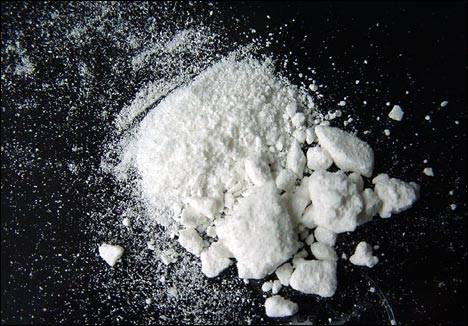
In my teenage years I sold and abused drugs, so much so that my All-American basketball status was overshadowed by conversations of "I know him he deals crack cocaine". What I learned during those times of street hustlin was an important principle that can be applied to the gospel. Let me explain. The typical street dealer almost never has a pure product of what we call "raw and uncut". Typically by the time the drugs hit the street level they have been cut by different additives to multiply the amount and increase profit. You simply do not sell raw and uncut to your clientele if you wish to make a larger profit.
I had much success in always finding the purest form of cocaine I could find and I would add very little cut to keep the drugs potent and powerful so my folks would come back to me. While others in the game were watering down their product mine was considered the raw and uncut. What the junkies knew was "the purer the dope the greater the high".
In so many ways that is the gospel. It is most effective when administered raw and uncut. The purer the gospel we proclaim the greater the high. When I say "high" I don't mean ecstatic experiences but rather a deep sense of knowing your infinitely lost but yet infinitely loved. There are a few additives I see people using to "cut" the gospel. What are those cutting agents you ask?
1- Relativism, or antinomianism. Simply put making the gospel of Jesus Christ about a ticket to get out of hell free. This form of the gospel says no matter what you do Jesus loves you and is well pleased regardless of what your life looks like because after all we are all sinners and no one can add up to God's standard. It downplays how we pursue holiness and surrender our lives to the Lordship of Jesus.
2- Legalism- The second is equally deadly. This view intermingles works with faith and is a response to human pride and arrogance that we can somehow make ourselves right with God through our righteous deeds. This view is sometimes the most subtle to invade our hearts. We tend to react to licentiousness or antinomianism by adding works as a prerequisite for salvation. Even well meaning Christians who see an apathetic response to the obedience laid forth in Scripture can find themselves crossing this line unknowingly, placing emphasis on works for salvation.
Both of these views distort the gospel of grace. The raw and uncut gospel is that Jesus saves sinners. It is His incarnation, atonement, substitutionary death and resurrection that secures our right standing with God received by faith and repentance. It is the gospel that takes me deep into my heart to see I don't add up to God's standard and holiness. It doesn't leave me there but rather causes me to go deep into seeing God's grace and mercy, love and patience for sinners.
Working with the poor I often encounter Christians who are adding to the gospel. They see the lethargy of Western Christians, the materialism and isolation and react by adding justice and good deeds to the gospel. I understand why we do this because human pride wants to elevate our own experience and standing with God by what we do.
The raw and uncut Gospel is the good news...good news is something has already taken place, and that good news is that Jesus saves sinners by grace through faith and that faith never remains alone if it true faith in surrendering to the Lordship of Christ. The more we preach to ourselves and others the uncut gospel the deeper with go into our sins but the more we see grace. That grace, that love Christ has for us then compels us and motivates to love others, do justice, love mercy and walk humbly with our God. You don't have to add works to make the gospel message more powerful. When rightly understood the gospel produces deeds of love and mercy. It has to happen if we are indeed in Christ but we must not make those deeds of love and mercy part of the gospel. It is the effect of the gospel taking root in us in it's raw and uncut form.
Ephesians 2:8-10 sums it all up for we are saved by grace alone through faith alone, but faith never remains alone...it produces the righteousness and compassion of Christ in us that changes who we are and propels us to walk in good works that the Lord has foreordained for His people.
Sunday, September 2, 2012
Can Gospel Rap Redeem Hip Hop?
Disclaimer: This blog may be premature as I am still working through this issue. In many ways I have more questions than answers but I want to begin this discussion because I feel it is an important one to have. In no way do I wish to condemn the brilliant work I am seeing from current gospel rap artists. That is not my intent. I simply have a bunch of questions brewing in my mind regarding hip hop. Those of you who know me personally realize my testimony and background as one who used to drink in hip hop. One who used to sell dope in the hood, carry guns, abuse women, smoke weed everyday, sag my pants, and walk around with a F-U mentality.
I love listening to Lecrae, Derek Minor and most of the solid gospel rappers. I love what they are doing, the concerts and the message they put forth. I buy their albums and vibe with their work. Let me repeat...I LOVE them! So please don’t see this as a diss. I simply have questions that I believe we need to critique and address if we want to impact urban youth. I work in urban ministry and find myself around urban youth who have been drenched in hip hop culture just like I was. So the following is simply questions I have as to the effectiveness of the current gospel rap music.
Hip Hop... What is it? How do we define it? How do kids in the hood see hip hop? Can you be hip hop and value education?
For most folks in the hood hip hop is a culture not simply music. Most modern hip hop artists condemn education and promote a self-centered, materialistic lifestyle. The young fan of hip hop introduced to gospel rap finds it incompatible with real hip hop as he sees it. Hip hop music is simply not what it started out to be. It is now a culture that is pervading kids nationally. It used to be you could clearly discern between hip hop and gangsta rap, hip hop and R&B. You could clearly see distinction between Keith Sweat and Tupac. But now the R&B guys are tatted up and speaking the same things the thugs are talking about, so much so you can’t find an album that doesnt have a collaboration of those different artists. Everybody wants to be hard now, even most of the R&B dudes. Hip hop culture, not just the music has taken over the inner cities. The Problem
The young men I have spoken with disdain gospel rap as real hip hop because to them hip hop carries with it a thugged out mentality. In their eyes you cannot be educated, stay in school, care about others and still claim to be hip hop. Hip hop as they see it through their lens is gangsta, it is popping bottles, it is being hard and carrying heat. It is driving nice cars, buying out the bar, and living life as a modern day god in society, being idolized by others and influencing culture.
On the other side people from the burbs and middle class think holy hip hop (thats the term they use) is breaking down barriers in the hood and promoting Christianity but is it really working? Are kids in the hood responding to this new form of rap? Or do they simply find it incompatible with true hip hop as they see it? Why do most African American churches resist gospel rap as a form of evangelism and deem the hip hop culture (not people, culture) unredeemable? I don't think most suburban pastors who endorse gospel rap and use the word hip hop in association with it understand that hip hop is it's own religion.
KRS-one defined hip hop as a religion, a way of life which is antithetical to the reality of the gospel which calls us to self-denial and the Lordship of Jesus Christ. The gospel doesn’t call us to blend in a culture that is promoting death and narcissism. No indeed the gospel calls us to abandon ourselves and put on Christ.
With that said I am certainly not denouncing gospel rap. I am simply coming to ask some hard questions. Most suburban pastors hoping to see racial reconciliation who admire young theologically sound rappers fail to address these concerns because they have never lived in the hood nor realized the impact hip hop culture has on urban youth. They don’t understand nor recognize what urban youth are saying about gospel rap and hip hop. They (Suburban pastors) think its a great tool to bridge the gap between urban youth and the gospel but who are the majority of people buying the albums and going to the concerts? Primarily not urban youth, rather suburban kids, or old heads like myself who already know Jesus.
Having lived the hip hop culture for over 15 years I have experienced the destructive nature of it. It influenced me to sell dope, sleep with women, and chase the boastful pride of life (all came from my filthy heart yet fueled by hip hop music & culture). I needed deliverance through a Savior who would take me out of that culture not teach me how to do it in a way that glorified God (2 Cor. 5:17).
Is Gospel Rap making a difference in our inner cities or is it simply a cool form of rap that myself and many others love to listen to? Can gospel rap provide an alternative to the hip hop music that is currently engulfing urban culture? I hope so. I personally think it is amazing how talented these artists are and how deep theologically they think through certain issues. So if they are speaking the truth why are so many black churches against it? I believe this is so because they find it incompatible as well to divorce a death culture from Christianized version of it. They simply cannot assimilate solid theology over the very same kind of music that has contributed to ghetto nihilism. I am not saying they are right but they certainly have a point especially when you understand that hip hop is a religion.
I believe Gospel Rap is never going to be fully endorsed because it is, in the opinion of many, mimicking a cultural movement that has devastated urban America. The term hip hop cannot be associated with what gospel rappers are doing but can we truly make a distinction? Thoughts? Feedback?
Thursday, July 5, 2012
Discipling Urban Youth
When we talk about discipleship in the evangelical circles today it typically is limited to spiritual matters. Most times when people discuss discipleship it involves small groups, personal spiritual disciplines, prayer, scripture memorization and accountability. All of these are good things, great things in fact. But we typically stop short of teaching a fully orbed gospel of the kingdom which permeates every aspect of life including the physical realm. Why?
Well first of all I would argue that we see discipleship as only post-conversion. We have missed that a form of discipleship takes place before people actually become Christians. This is especially true among urban youth. Discipleship is definitely teaching believers to mature and grow in grace and usefullness for service. But it is also pre-conversion in that it deals with core cultural concerns relating to urban issues that an urban youth has. Carl Ellis defines discipleship as, "When you engage someone with the person of Jesus Christ through practical encounters and conversation".
I bring this up because many times urban youth do not connect with our methods of evangelism. Before we can bring these men to a point of making a decision for Christ, they need to see how the gospel of the kingdom addresses their core issues. We also need to be aware that urban youth suffer from broken value systems. That means discipleship involves far more than simply teaching them the Bible and memorizing Scripture. We need to connect the Bible in a way that teaches achiever values and breaks down subsistence values. Sometimes it is not simply a moral or character flaw that is holding them back, it is the fact that they have adopted faulty values that lead to nihilism and despair.
Subscribe to:
Posts (Atom)